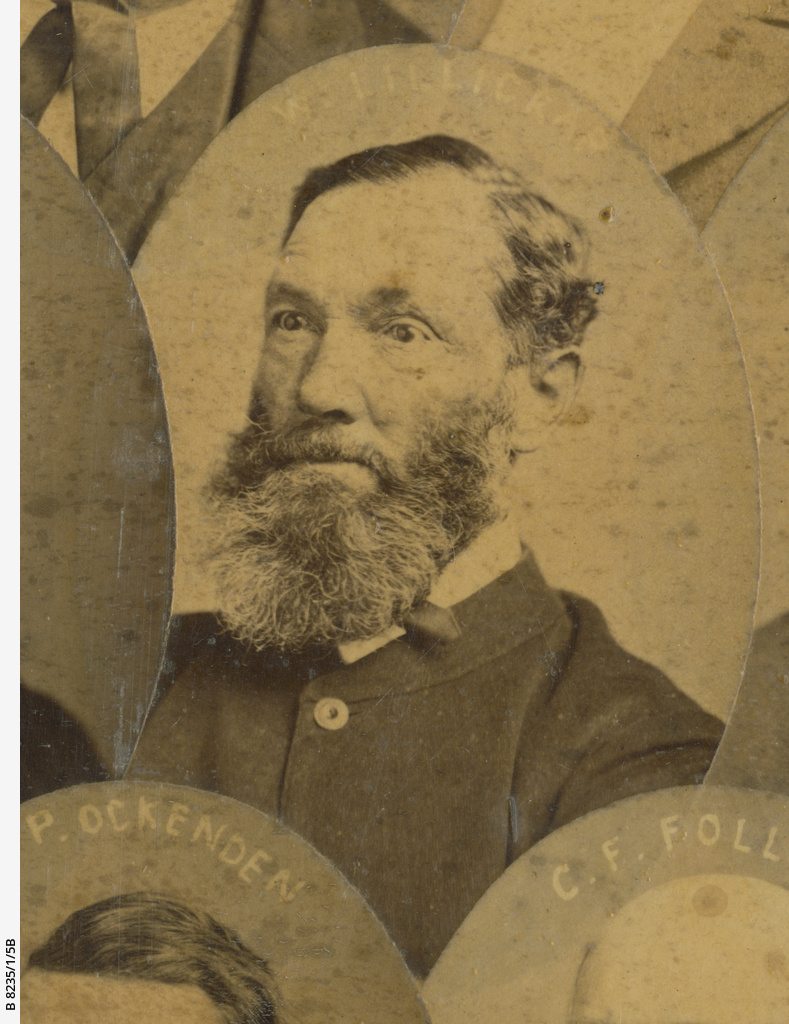
Twelve years after migrating from England, pioneers William and Jane Lillecrapp built their family home ‘Netherhill’, in 1849 at Kenton Valley in South Australia. With additional land holdings at Eden Valley, Noarlunga and Macclesfield, they chose to establish their family homestead at Kenton Valley. They named the property after the historical Lillecrapp family farm, ‘Netherbridge’ (meaning beneath the bridge) in Devon, West England.
Before migrating to Australia, a young William Lillecrapp most probably worked with his father and brothers on the family farm ‘Netherbridge’, (after their father’s death, the property was inherited and run by the family’s youngest son/brother, Charles). William went off to work as a shepherd and labourer in Charlton Horethorne. Times were tough in England during this period due to overcrowding and widespread unemployment and poverty. It’s not known how he came to find a job in Australia working as an Assistant Superintendent of Sheep for the South Australian Company (a privately-owned land company that owned and farmed a great deal of land throughout the state). However, it is likely the prospects of a better life in the new free colony of South Australia was appealing to young and adventurous English men and women. It is said that young William was engaged to be married and that his fiancé would not (or was not allowed to) migrate with him. This meant he was to find a wife in a hurry and be married before embarking on his new life in Australia. William married Jane Ryall on the 7th June 1837 at Somerset and they set sail for Australia on the ‘Katherine Stewart Forbes’ just a week later, on the 14th June. They arrived at Holdfast Bay, South Australia, just over five months later, on the 17th October 1837. This was a successful marriage that lasted 33 years and produced nine handsome children—eight of those surviving to adulthood (Emily 1838, William 1840, John 1841, Albert 1843, Mary 1845, Charles 1847, Francis 1849, Elizabeth 1853 and Emily 1856). The youngest two children were born at ‘Netherhill’.
When William and Jane arrived in South Australia, their first home was a tent on the banks of the River Torrens, just off today’s North Terrace in Adelaide. William worked as a clerk for the South Australian Company in the Adelaide head office. William and Jane later settled in the Adelaide Hills at Macclesfield with a land grant of 23-acres. In 1844, William Lillecrapp is listed as farming two and a half acres of wheat, a quarter acre of garden, 14 cattle and two pigs (Macclesfield—Reflections Along the Angus). William’s job involved some travel and surveying land to purchase for the Company, and he was known to be in the South East of the state in 1845. On his return to Jane and their growing family, who were by then living in Gumeracha, he received a promotion as Superintendent of all land at the Sources of the Torrens. At this time, they took up residence at the company’s headquarters in Gumeracha called ‘Ludlow House’. This is where Jane gave birth to their fifth child. William had also now received land grants for land at Maccesfield, Kenton Valley, Eden Valley (the 81-acres at Eden Valley was purchased in 1859 for £93 pounds) and Hindmarsh (two allotments off Port Road in 1863).
According to PIRSA’s History of Agriculture in South Australia:
“Among the provisions to ensure that the new venture would not become a financial burden on the Government, it was stipulated that land to the value of £35,000 must be sold before settlement could begin. The Commissioners sold ‘preliminary land orders’ each entitling the buyer to one town acre and one section of country land. The holders of these preliminary orders could take first choice of the land when it had been surveyed and present their orders to the Resident Commissioner in the Land Office, to receive their title deeds or ‘land grants’, as they are called. Sales did not go very well until the price of country land was reduced. Then George Fife Angas, Henry Kingscote and Thomas Smith who established the South Australian Company bought enough land orders to make up the balance of the £35,000.”
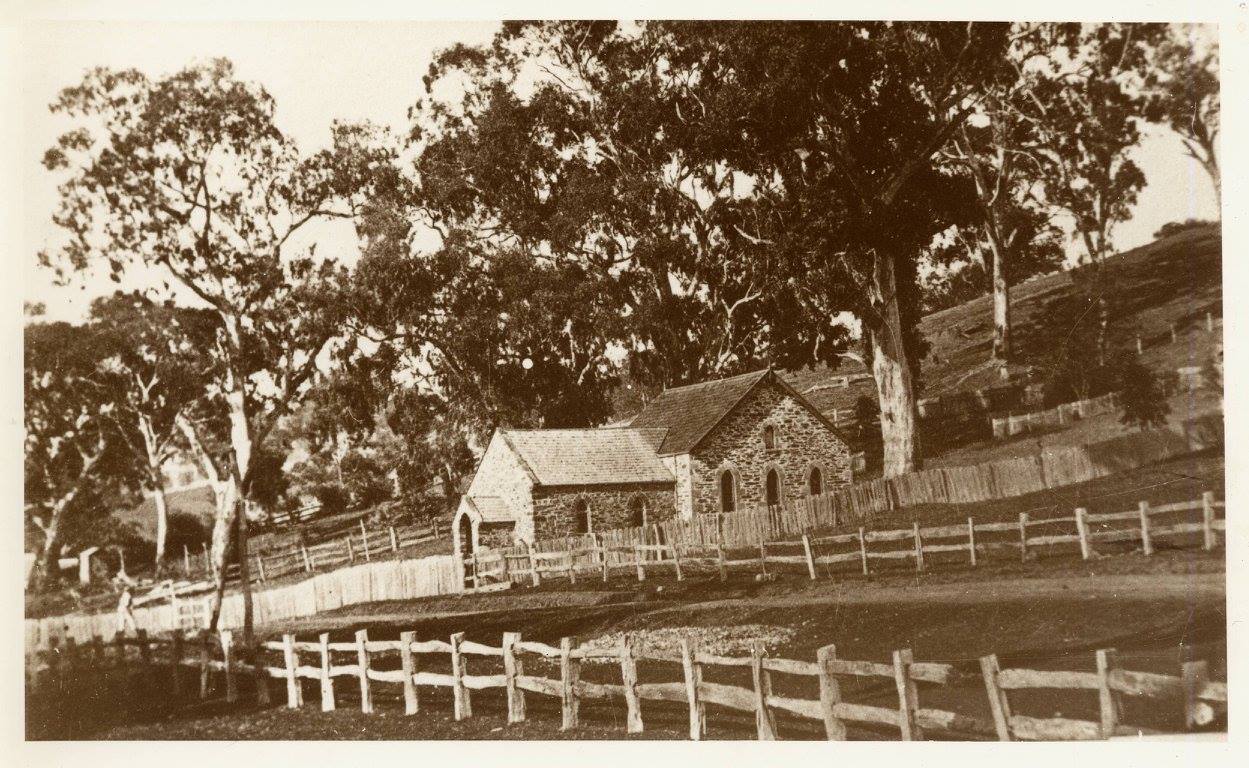
(On the left, Kenton Valley Church built by Michael Harris of Cornwall, circa 1849. Photo Credit)
William and Jane lived at ‘Ludlow House’ until their new house was built in 1849 on their Kenton Valley property, ‘Netherhill’. Soon after, William retired from the South Australian Company and took up fulltime farming. It is unsure how many acres made up ‘Netherhill’ during the early Lillecrapp ownership, however, the land in those early days had mostly been surveyed into 80-acres rectangular lots, regardless of terrain.
The newly built ‘Netherhill’ house consisted of four main rooms. In the original kitchen there was a huge buttressed chimney, as found in traditional Cornish homes, and a very large open fire place with a roughly adzed lintel. The fireplace had big iron bars bolted in the side walls to swing the cooking pots on. The house was made of bluestone quarried on the property, with some chalk stone quoins coming from a neighbouring property to the east (near where the old talc mine was), along with mortar made from clay. The plaster on the walls was mixed with lime, sand and horsehair. The horsehair wasn’t from the mane and tail, as you’d expect. It came from the curry comb after the horses were groomed. The floorboards were made of red gum cut and straightened by hand at the property’s saw pit and were butted together tightly (without tongue and grooves). In the original kitchen the wooden bearers were rested on the bare earth, with no skirting boards.
The roof shingles were made from stringy bark and later, by the next generation, were covered over with corrugated iron. The external windowsills were made of red gum and the internal windowsills and frames, doors and doorframes were all made from cedar. In 1974 the windows in the original end of the house were still in the original casement and the glass panes were small and uneven and pitted with bubbles, which distorted vision when looking through. Most building materials were sourced from the surroundings and the builder used handmade nails.
A unique feature in the original end of the ‘Netherhill’ house was the old hallway with curved walls, which still exist today. Apart from the house’s original four rooms, it is believed there was another room to the back of the house where the bathroom is now located (2018). During renovations in the 1970s, a cornerstone was found on the back veranda and it is suspected the additional room could have existed there. There was also evidence found of steps into a possible cellar on the south west of the original kitchen. It is not known if the cellar was filled in or simply covered over, but it is located where the main hallway now stands (2018) and went towards the back of the house.
There were two springs and three wells on the property. Along with clearing and establishing the land for agricultural use, William Lillecrapp went about establishing the property with garden trees and planted a grove of elms, Moreton Bay figs, Norfolk pines and a stately Bunya Pine tree on the front lawn. These are the same trees planted in the garden at the original Randall house (Kenton Park) in Gumeracha. These trees enjoyed the fertile Adelaide Hills soils and grew extremely large and impressive, with many of them standing for at least 160 years. It is believed some Lillecrapp children were married under these trees, as were children in the subsequent Sandercock and Reid families. William had also planted an orchard of fruit trees such as pears, apples, plums and nectarines and some citrus including lemons and oranges. The plum and apple trees were producing good quantities of fruit for sale, as described in the 1863-1864 transcribed diary of William and Jane’s son, William Spettigue Lillecrapp. At the time of the diary, the Lillecrapp boys were also picking gooseberries to sell in Adelaide. Several sons were travelling regularly by horseback to their Rhine property where they were growing crops. At ‘Netherhill’ the diary also describes the family growing potatoes, cutting timber to make fence posts and quarrying stone.
The very large stable was directly across what is now known as Netherhill Road. It is not clear when the stable was built. It had a huge stone spine. At one end were two bedrooms, a fireplace and room to store the buggy and equipment. The horses were housed in the other end. It’s not known who the bedrooms were originally meant for, perhaps some of the Lillicrapp sons or maybe workmen. However, when the Sandercock family owned ‘Netherhill’, according to Ellie Sandercock, some of the older sons were said to have slept in the stables. The stables were renovated into a family home many years later and remains a private residence.
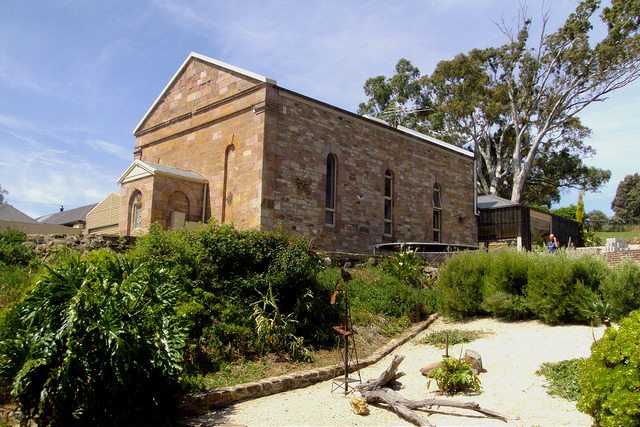
(Above, Gumeracha Salem Baptist Church)
Members of the Lillecrapp family travelled to Gumeracha regularly for social activities, services, trading and to shop for food and farm merchandise. Each Sunday they attended sermons at the Gumeracha Salem Baptist Church, fronted interchangeably by clerics and several local lay preachers. Church was usually held twice on Sundays. Travelling to nearby Lobethal and Woodside seemed less common, but various trips are mentioned in William Spettigue Lillecrapp’s Diary.
Although there is no official record, it is assumed the ‘Netherhill’ house would have been built by Michael Harris (a forebear of a later owner of the property, Margaret Reid). Michael came to Australia in 1847 and resided at Kenton Valley and worked locally as a stonemason and builder. Records show that during this same period, Michael Harris built the Kenton Valley church and the manse at the end of the Netherhill Road. Michael is buried in the Salem Baptist Church at Gumeracha.
(Above, Kenton Valley Church built by Michael Harris of Cornwall, circa 1849. Photo Credit)
The Kenton Valley church was located at the end of Netherhill Road. It still stands today after being renovated into a home in the 1980s. The church was headed by the Reverend Tuck, originally from Mt Torrens. His two sisters, Sophia and Harriet, ran the Kenton Valley School. He lived in the manse by the church and the sisters lived on Netherhill Road across from the creek. The Kenton Valley School was attended by the two younger Lillecrapp girls. Later, the Lillecrapp daughters would make social visits with the Tuck sisters and attend events. Records show Sophia Tuck operated the school as a female school.
Here are comments by a school inspector in 1859 and then again in 1861:
“A female school, principally of very young children, fairly conducted. The school premises, situate in a private house, are of very limited accommodation,” and “A female school, principally of very young children, fairly conducted. The school is held in a private house, to which a commodious school-room has been added”.
(On the left, Gumeracha Salem Baptist Church.)
Inspection records of the school begin in 1859 and Sophia Tuck resigned from teaching by 1885. Amy ‘Harriet’ Tuck is registered also as a teacher being appointed as a sewing mistress at Mt Torrens from 1876 to 1887. Lillecrapp records refer to Harriet running a ‘Ladies School’ at Kenton Valley, so perhaps she taught domestic skills to the older girls.
It’s not sure where Charles and Francis Lillecrapp went to school, since the Kenton Valley School is registered as being a female school. However, the older five Lillecrapp children attended school in Tungkillo. This meant they would board with friends during the week and walk all the way home to Kenton Valley for weekends.
William Lillecrapp was active in the community and was a founding member of the Salem Baptist Church at Gumeracha. He was also appointed a Justice of the Peace where he was to help keep the pace by hearing and determining charges for locals who had committed petty offences. His wife, Jane, died on 7th July 1870 when their youngest child was just 14. She was buried at the Salem Baptist Church at Gumeracha. William remarried two years later to widow, Jane Hooper (better known as Jeanie). Jeanie had two unmarried adult sons, John and Henry, who went on to marry William and Jane’s two youngest daughters, Elizabeth (Bessie)—in 1875 and Emily—in 1877, respectively. Several years after his retirement, William died of a stroke in 1881 and was buried at the Salem Baptist Church at Gumeracha next to his first wife, Jane. Jeanie survived her second husband by nearly 30 years. She died in 1910 and is buried at the Payneham Cemetery next to her son, Henry Hooper.
It was after William and Jeanie’s retirement to Kent Town in about 1880, that William’s eighth child, Elizabeth, along with her husband of five years, John Hooper, took over farming at ‘Netherhill’. They owned the property for nearly 20 years. They had a family of eight children in the ‘Netherhill’ house—five daughters and three sons (Mary 1876, Bessie 1878, Isabella 1880, John 1882, Alice 1883, Charles 1884 and twins Andrew and Margaret 1885). To accommodate their growing family, the Hooper family built on to the house sometime during the 1880s. The new extension included a large hallway and a new front entry door (originally, the back door of the house came off the new hallway), a pantry, a new kitchen (with whitewash over the stonework, the same as the Old Dairy), a new backdoor and a large sitting room both with two new fireplaces with chimneys. The original kitchen then became the dining room for subsequent families. There was once a servery between the kitchen and the sitting room. The new fireplace was a tall structure and the new kitchen fireplace was very low being about four feet from the ground. It is suggested the original cellar became defunct at this time, as a new building (known by later families as the ‘Old Dairy’ and more recently the ‘Creamery’) was built behind the house into the side of an embankment. This was a common practice at the time. The building was constructed with stone walls half a metre thick for insulation. The dairy was used to store foods in cooler temperatures, such as home-grown ham, bacon and sausages, and to store milk in pans where they would collect the cream. Later, there was a big tree trunk about two feet in diameter installed in the Old Dairy that had a separator bolted to it. The Old Dairy had two doors. One was wide with a door made of wooden slats. There was a second narrow door that was already bricked in by 1974. It is now known they there were two doors side-by-side, but perhaps the wider door was to accommodate the women with their large hooped skirts. There is a small window in the Old Dairy. When the rotting window frame was replaced in the 1990s by local builder, Bronte Kerber, it was discovered the frame was made of timber from old apple packing boxes stamped for export to England. The stencils were still hanging in the Old Dairy in 1974.
Lillecrapp records have Elizabeth and John Hooper moving to Queen Street in Norwood in 1890, where the children were well educated. Some of the older children had earlier attended the Tuck’s Kenton Valley School. After moving to Norwood, some of the younger girls attended the Brown’s School (now known as Wilderness College) and Miss Derrington’s School at Magill. Several of the younger boys attended Prince Alfred College.
John started a partnership with his brother, Henry, operating a successful general store and bakery at High Street, Kensington, known as ‘J. Hooper and Company’. Of the eight Hooper children, two daughters became nurses, one become a teacher, one son joined the family business working in the general store and bakery and one become a mining engineer. Only two followed the family tradition and ventured into agriculture. Alice Hooper married a fruit grower named William Ind and they had a property at Paradise they named ‘Netherhill’, assumedly after Alice’s fondness for her childhood family home at Kenton Valley. They later continued fruit growing in Paradise across the Torrens Creek at an Ind family property called ‘Balmoral’. Elizabeth and John’s youngest son and twin, Andrew, first worked as a wool classer and then later become a grazier at Myponga.
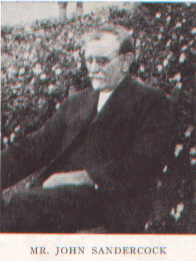
It is unknown exactly who farmed ‘Netherhill’ between John and Elizabeth’s move to Norwood in 1890 and the eventual sale of the property in 1898 to neighbour, John Sandercock. In the book ‘Dust Storms in China Tea Cups—The Ragless Family Heritage to Australia’, it is mentioned that Richard Spotswood leased five sections of land totalling 312 acres in the Hundred of Talunga for five years between 1894 and 1898. It goes on to say the owner, John Hooper, a storeman from Kensingston, decided to sell the property in mid-1898 to John Sandercock, a farmer of Kenton Valley, adding it to his property which had been occupied by the Sandercock family since the 1830s (1988, p.136). This interesting twist links the history of ‘Netherhill’ to Margaret Reid once again, as Richard Spotswood’s mother was Sophia Ragless, sister to Benjamin Ragless (Margaret’s great grandfather).

Sources:
-
The Lillecrapp Families of South Australia, Lillecrapp Family Reunion Committee, 1988, Gillingham Printers Pty Ltd, Adelaide, South Australia.
-
William Spettigue Lillecrapp’s diary, September 1863-April 1864 (Edited with notes and a response by Paul Depasquale), 2008, Pioneer Books, Oaklands Park, South Australia.
-
Netherhill School Assignment’ 1981, Kathryn Reid
-
http://www.pioneerssa.org.au/files/36%20Lillecrapp%20APPROVED.pdf
-
http://www.library.unisa.edu.au/condon/teachers/Teachers.asp?TeacherID=1728
-
Gumeracha Centenary History (1839–1939), 1978
-
Recollections of stories by Lionel and Beryl and Elly and Rita Sandercock told to Margaret Reid
-
Dust Storms in China Teacups—The Ragless Family Heritage to Australia, 1988
-
http://www.lonetester.com/2013/07/a-dose-of-local-history-and-surprises/